
Tapped Out of the Narrative
What chemo, Columbine, and a culture of outrage taught me about pain, propaganda, and staying human.

I’ve officially completed three full rounds of arsenic treatment. That’s four weeks of daily, two-hour infusions, eighteen weeks total.
My reward? Fatigue, brain fog, and the overwhelming sense that the nurses are one sarcastic comment away from “accidentally” swapping my IV bag with a bottle of ranch dressing. And honestly? Fair. I’ve been asking for the aux cord since week two.
But as grueling as this medical protocol has been, the scariest moment I’ve experienced lately didn’t happen in the infusion chair.
A Bloody Parallelogram
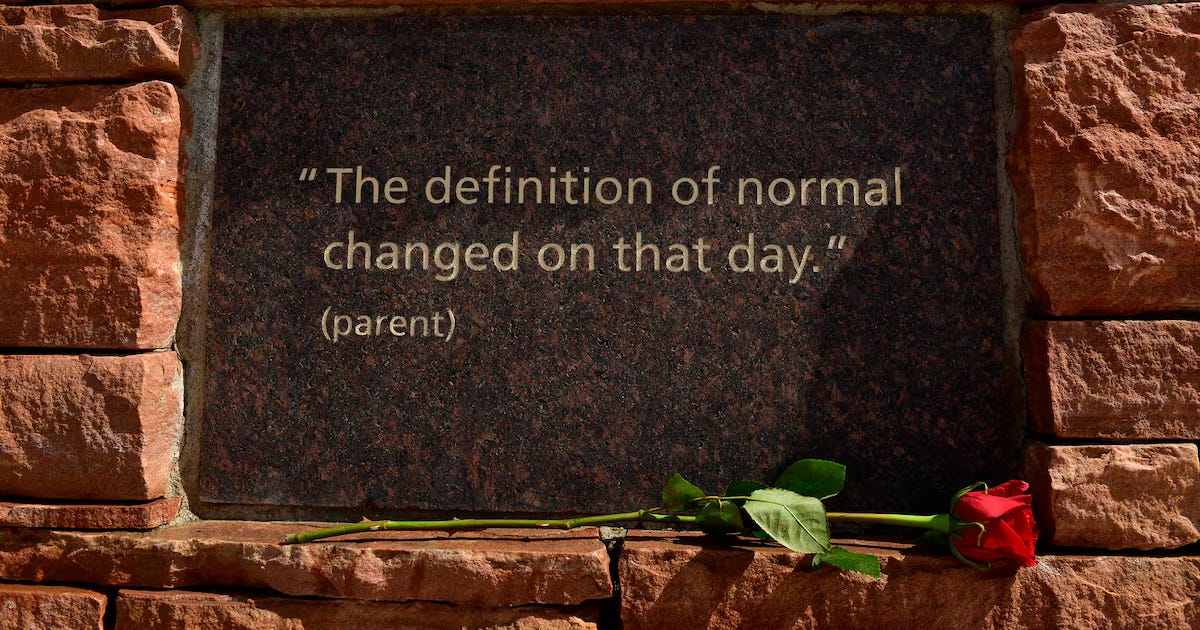
In April of 1999, I was a junior in high school. Columbine High School, eleven miles from where I sat, was under siege.
Kids who looked like me. Dressed like me. Walked through the same mall as me. Played the same video games. But that day, they were broadcast on live television, escaping through shattered windows and fire alarms, and the American dream turned into a nightmare.
It was the birth of the 24-hour news cycle, and the funeral of innocence for an entire generation.
Fast forward to September 2025.
An act of violence unfolds in Orem1, just thirty miles south of my home in Heber, on a campus where I’ve spent time. Familiar buildings. Familiar faces. What disturbed me most, though, was receiving the up-close video from my 20-year-old daughter and 17-year-old son. This time, it wasn’t just that the victims looked like me; it was the man, the kids, the energy. They were me, or at least the version of me I could’ve become in another timeline, with a different set of fractures and fewer tools to process them. What followed was:
Swift, hysterical, inaccurate.
Politicians scrambled for camera angles. Social media screamed louder than the sirens. Everyone with a platform became an expert. Somehow, nobody knew what the hell had actually happened. An early, gut-level sense of failure in our systems, an emotional fog before the facts, yet even as new and evolving information came forward, the outrage machine had already taken the wheel.
That’s the bloody parallelogram we now live inside, where facts are bent by fear, and fear is sold wholesale.
Fear is a Hell of a Business Model
Matt Taibbi wrote in Fear, Inc. that the media doesn’t sell facts; they sell fear, because fear keeps you watching.
“If you’re not scared, they can’t sell you safety.”
In the media’s eyes, the ideal citizen is terrified of the other side, glued to a screen, and ready to buy whatever balm the sponsors push between segments.
And the formula works:
Create a villain.
Distort the context.
Repeat until it’s wallpaper.
Whether it’s crime stats in Chicago or drag queens in Florida, the story isn’t about what’s happening, it’s about who we should blame, and how loudly.
Taibbi also warns that we’ve entered a time when the truth is irrelevant compared to the feeling of being right:
“News audiences now require stories that confirm their feelings of fear, resentment, and moral superiority, not stories that challenge them.”
Sound familiar?
Scroll your feed post-tragedy. Everyone’s a victim. Everyone’s an expert. And everyone’s microphone is louder than their listening.
Manufactured Consent in Real Time
Decades before Zuck, Musk, and TikTok, Noam Chomsky and Edward Herman laid out a blueprint in Manufacturing Consent for how mass media filters information to maintain the status quo:
“The media serve, and propagandize on behalf of, the powerful societal interests that control and finance them.”
They introduced the “Five Filters” of mass media tools used to decide what stories get told, and how:
Ownership (corporate media serves corporate interest)
Advertising (content must please sponsors)
Sourcing (journalists rely on insiders, not outsiders)
Flak (pushback is used to silence dissent)
Anti-communism / ideological control (fear-based framing keeps people aligned)
In modern terms?
That’s clickbait headlines, influencer echo chambers, selective sourcing, ratio’d posts, and “cancel culture” outrage cycles. It’s not a conspiracy. It’s a business model. Chomsky writes.
“Propaganda is to a democracy what the bludgeon is to a totalitarian state,”
In 2025, that propaganda doesn’t have to come from the top. It’s crowdsourced. Repackaged by your cousin on Instagram with a “❤️” emoji and 400,000 likes.
The Need to Be Right (Even When We’re Hurting)
There’s something painfully human about needing validation, especially when hurting. When we feel powerless or scared, we seek meaning. We seek tribe. We seek a story that tells us we’re okay, good, and on the “right side.”
It’s not just politics. It’s biology.
Validation triggers the same reward system as a good meal, sex, or a shot of morphine.
But here’s the rub: We crave control. Control online looks like a sharp take, spicy comment, and a dopamine rush from validation. When we’re scared, misunderstood, or grieving, being “right” is easier than being raw. Being “informed” is easier than being vulnerable. Being “loud” is easier than being still.
If your sense of safety depends on being agreed with, you’ve already lost.
From the Chair to the Mat
I’ve been literally full of poison this year. Arsenic, ATRA, prednisone, anti-nausea cocktails that sound like rejected IPA names. But it’s not the chemicals that scare me, it’s the culture. The one that makes us choose sides before we choose truth. The one that rushes to blame before it sits in silence. The one that taught us that being right is more important than being human. To defend people before we examine principles. To confuse being loud with being clear and right with being whole.
We’ve become addicted to personalities. We let pundits, influencers, and political figureheads rent space in our minds for free and call it “thinking.”
We elevate people and burn principles.
And when those people fall short (as always), we double down instead of waking up.
Principles don’t trend, but they endure.
People get canceled. Principles don’t. Ego flips. Integrity holds.
I don’t have all the answers. Hell, I barely have eyebrows anymore. But I do know this:
If we don’t stop.
If we don’t breathe.
If we don’t sit with the actual pain instead of the performance of pain
We will poison ourselves.
Not with arsenic.
But with ego.
Not with ideology.
But with identity addiction.
Not with what we say.
But what we refuse to examine.
So here I am. Rounding a corner in my cancer treatment, Bruised. Chubby. Occasionally hilarious. Watching a nation that seems to have no idea how to treat itself. Maybe we should stop shouting into the void and start listening to the ache.
Maybe, just maybe, we could become people who feel, not just react. Who reflects, not just reposts. Who chooses principles, even when they’re not popular?
~Tyler
PS: Still Fighting, Literally
I signed up for the Tap Cancer Out BJJ Open this February.
It’s a jiu-jitsu tournament where we fight to raise money for cancer-related charities.
This isn’t just about a tournament. It’s about making sure all this pain serves a purpose.
If you want to support my fundraiser, click here to donate.
Or share this post with someone who might need to know they’re not alone and feeling lost.
While I’m intentionally framing the incident involving Charlie Kirk, I include this not to sensationalize, but to acknowledge the proximity and weight of witnessing violence, especially when it touches familiar ground. The Evergreen (Colorado) High School attack, among countless others, remains a haunting thread in that larger fabric.